Fuel efficiency is something you measure before you try to change it. Advice about saving fuel is everywhere, but only part of it applies to your vehicle and your route. Below is how to get a trustworthy consumption figure from ordinary fill-ups, which mechanical items are worth the money, and how to tell a real improvement from ordinary tank-to-tank variation.
Measure before you change anything
Change four things at once and watch one number, and you learn nothing: you cannot tell which change did the work. Get a baseline first, three to five tanks of normal driving logged the same way, with route, weather, and load noted. Then change one item and keep the rest identical. Without a baseline you are guessing, and the guess flatters whatever you just paid for. It is the discipline described on the methodology page, applied to your own vehicle.
The full-tank method
A full tank gives you two consistent points to measure between. Tank to tank you rarely know how much fuel was left at either end.
- Fill to the automatic cut-off at the pump you normally use, and do not squeeze in extra after the click.
- Reset the trip meter and note the odometer.
- Drive normally for a day, a week, or a whole tank. A longer interval averages out more conditions.
- Refill at the same pump to the same cut-off, and take the litres from the receipt.
- Divide distance by litres for km/L, or litres by distance and multiply by 100 for L/100 km.
Four or five averaged fill-ups make a usable baseline.
Which units to track
Pick one unit and stay with it. km/L is common across Asia, L/100 km is the official EU unit, and MPG covers the US and the UK. The two MPG figures differ, because a US gallon is 3.785411784 litres and an Imperial gallon is 4.54609 litres. km/L and L/100 km are reciprocals, so L/100 km = 100 ÷ km/L. For cost, keep distance in kilometres and mileage in km/L and apply cost = (distance ÷ mileage) × price; convert miles at 1 mile = 1.609344 km once, at the end.
Tyres and alignment
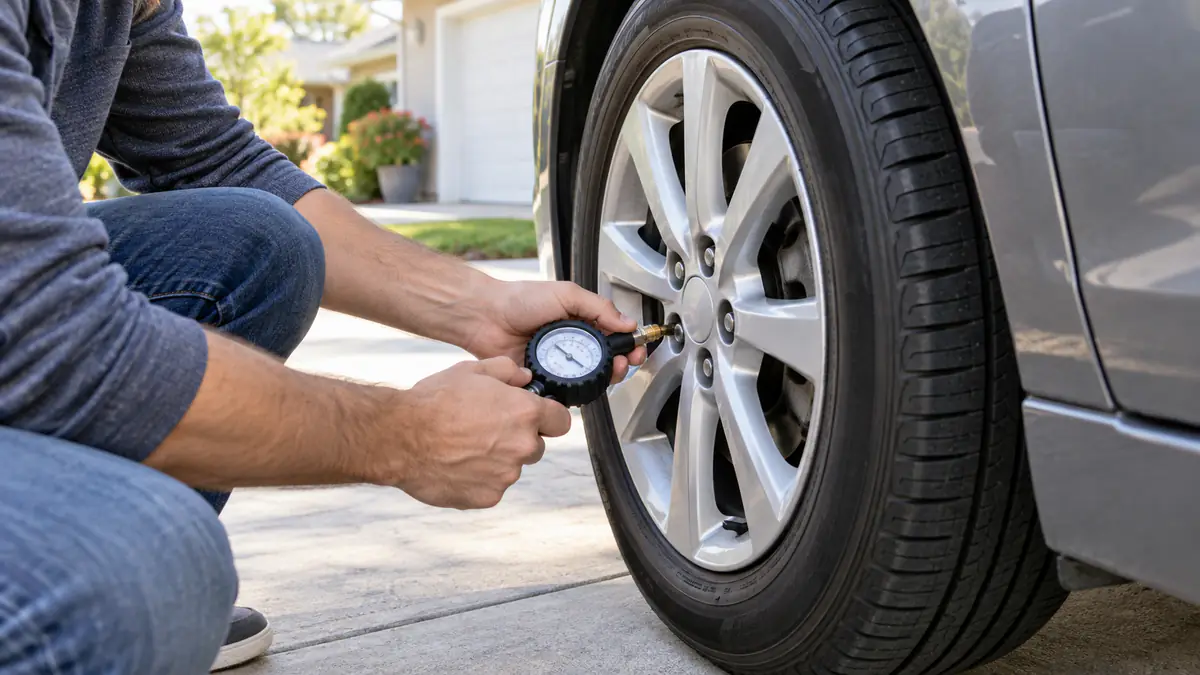
Tyres are the one item you can check yourself with no tools. Use the pressure on the door jamb or in the manual, measured cold, not the maximum printed on the sidewall. Check monthly and before long trips, because under-inflation raises rolling resistance and wears the shoulders faster. Alignment is separate: if the car pulls to one side, or one edge of a front tyre wears faster than the rest, get the geometry checked. A tyre scrubbing sideways costs more than most gadgets sold to save fuel.
Engine maintenance that matters
Most servicing keeps the engine healthy, and only part of it shows in your km/L:
- Air filter. A clogged filter restricts airflow. On a carburetted engine that enriches the mixture; on a fuel-injected one the effect is smaller but real.
- Spark plugs. Worn or fouled plugs cause misfires. Use the plug and gap the manual specifies.
- Oil. Use the viscosity the manual lists. The wrong grade adds friction and matters more for engine life than for a fuel number.
- Dragging brakes. A caliper that does not fully release, or a handbrake cable adjusted too tight, is a steady drag.
- Oxygen or lambda sensor. If it fails, the engine falls back to a rich default mixture, and an illuminated warning light is information.
Driving technique
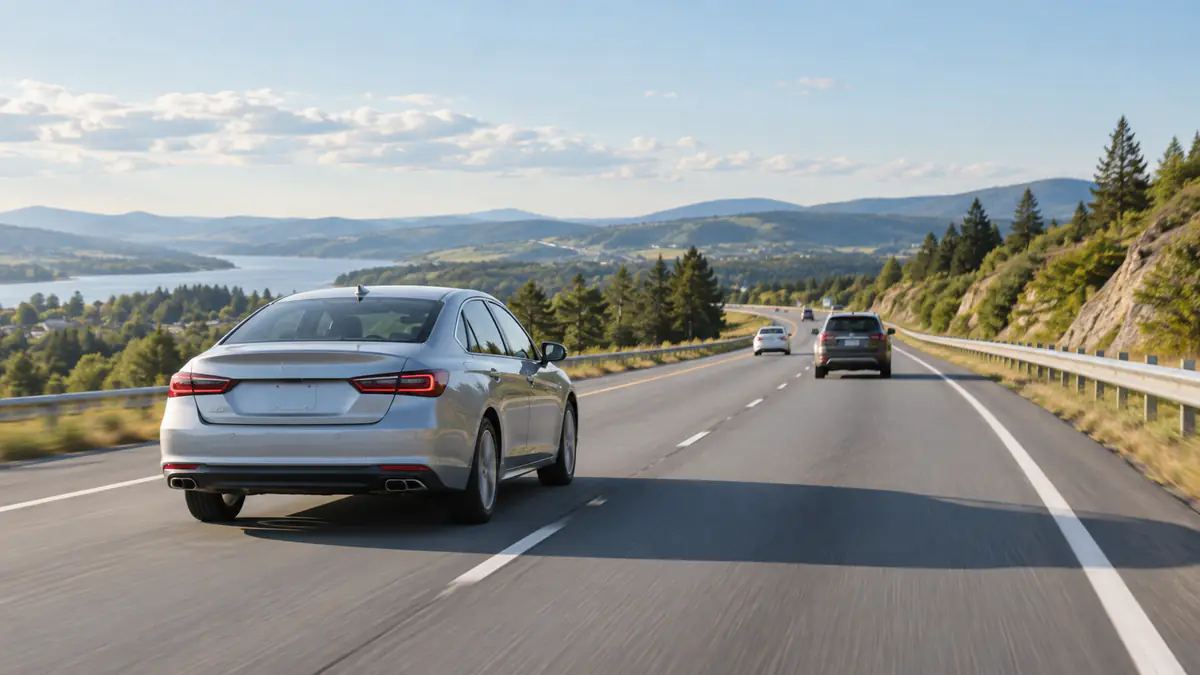
Accelerate at a normal pace to the speed you intend, then hold it. Lift off early instead of braking late, because fuel burnt to build speed you then throw away is wasted. In a car, change up early and settle into the highest gear that holds the road speed comfortably. On a bike, keep the revs in the middle of the torque band rather than short-shifting into a bog. Idling returns 0 km/L, so switch off for waits longer than a couple of minutes. Cruise control pays on flat roads; on steep descents it brakes and burns.
Load, weight, and aerodynamics
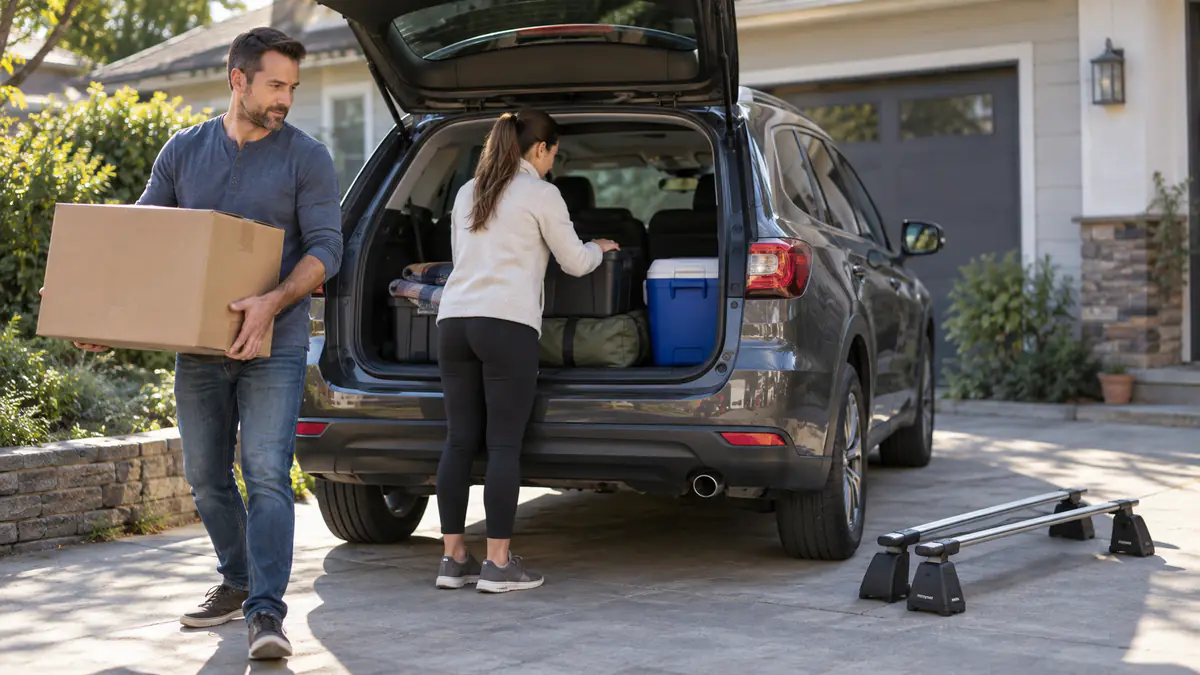
Every kilogram has to be accelerated and stopped, so weight costs fuel in stop-start driving more than on a steady motorway run. Clear the boot, the panniers, and the top box of things you are not using. Aerodynamics matter most at speed: a roof box or bike rack at 110 km/h costs far more than the same load carried inside, and empty roof bars left on all year are a permanent tax. A heavy top box changes bike handling before it changes the fuel figure.
Seasonal and route effects
A cold engine runs rich until it warms, so five kilometres of winter errands costs more per kilometre than the same trip with a warm engine. Cold air is denser, which adds drag but helps the engine breathe; the net effect depends on the vehicle. Air conditioning loads the engine, and the defrost setting runs the compressor too. Route matters at least as much: a city run averaging 20 km/h uses far more per kilometre than the same car cruising at 80 km/h. Write the conditions next to each tank so you compare like with like.
Bikes and scooters: extra items
Riders have a few items a car does not.
- Chain tension and lubrication. A chain set too tight loads the output shaft bearing and absorbs power; a dry chain does the same through friction. Check slack at the tightest point with the rider's weight on the bike.
- Tyre pressure. Small tyres lose pressure faster than car tyres, and a soft rear on a loaded scooter is easy to miss.
- Clutch. A slipping clutch raises the revs without adding speed, so you burn fuel for power that never reaches the road.
- Fuelling. A carburetted bike left on choke runs rich, and worn jets or a clogged filter do the same. Injected bikes manage the mixture themselves, but a clogged filter still costs you.
- Gearing. A larger rear sprocket improves acceleration and raises the revs at cruising speed.
The mileage calculator returns your figure from two fill-ups.
Reading your results
One tank is a single, noisy data point: pump cut-off, ambient temperature, fuel temperature, and how much you squeeze in all vary. Use a rolling average of three to five fill-ups before believing anything, and treat a move of a couple of percent between averages as noise. What counts as a real change depends on your vehicle and how consistent your method is. Look at the shape of the series: a slow drift over months suggests something mechanical, while a step change after a service points at the work you had done. A cheaper fill-up changes your cost, never your efficiency.
What rarely makes a measurable difference
Additives sold as combustion improvers seldom show up in a tank-to-tank comparison, and neither do magnetic or vortex devices fitted to the air intake. Higher-octane fuel does not contain more energy; it helps engines that specify it and can prevent knock under load, but it will not lift your km/L. Over-inflating tyres past the placard figure trades grip and uneven wear for a gain small enough to hide in the noise. Coasting in neutral is poor for control and illegal in places.
That is the method: measure consistently, change one item at a time, and stay sceptical about small differences. Put your numbers into the Petrol Expense Calculator, or the bike petrol calculator if you ride. The petrol expense guide covers the cost formula itself.
Published 18 September 2026. Reviewed 18 September 2026 by the Petrol Expense Calculator editorial team.