Ask two drivers whether diesel is cheaper than petrol and you can get opposite answers, both said with confidence. They are often both right, because the question is not really about the fuel. It is about how far you drive, the gap between the two prices at your pump, and what you paid to get the car in the first place. A diesel can be the cheaper choice for one driver and the dearer one for another on identical roads. This guide sets out the calculation rather than handing you a verdict.
Start with cost per kilometre, not pump price
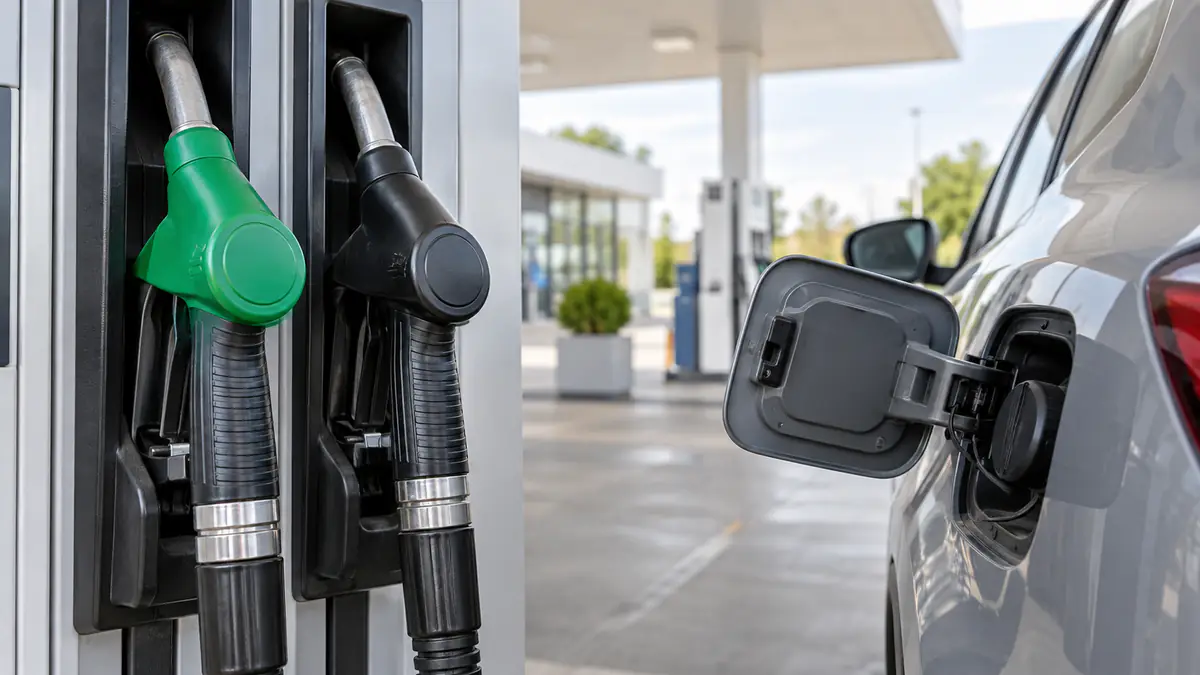
The number on the forecourt sign is a price for one litre, and a litre is not a fixed distance. A car that covers 16 km on a litre and one that covers 20 km both pay the same at the pump, but they buy different amounts of travel. Compare in cost per kilometre or cost per mile and the picture becomes clearer. The site formula, fuel cost = (distance ÷ mileage) × price per unit, gives total spend; divide that total by the distance and you have cost per kilometre. That per-kilometre figure is what actually decides which fuel is cheaper for your driving, and it stays stable while the pump price moves around it.
Why diesel often uses less fuel
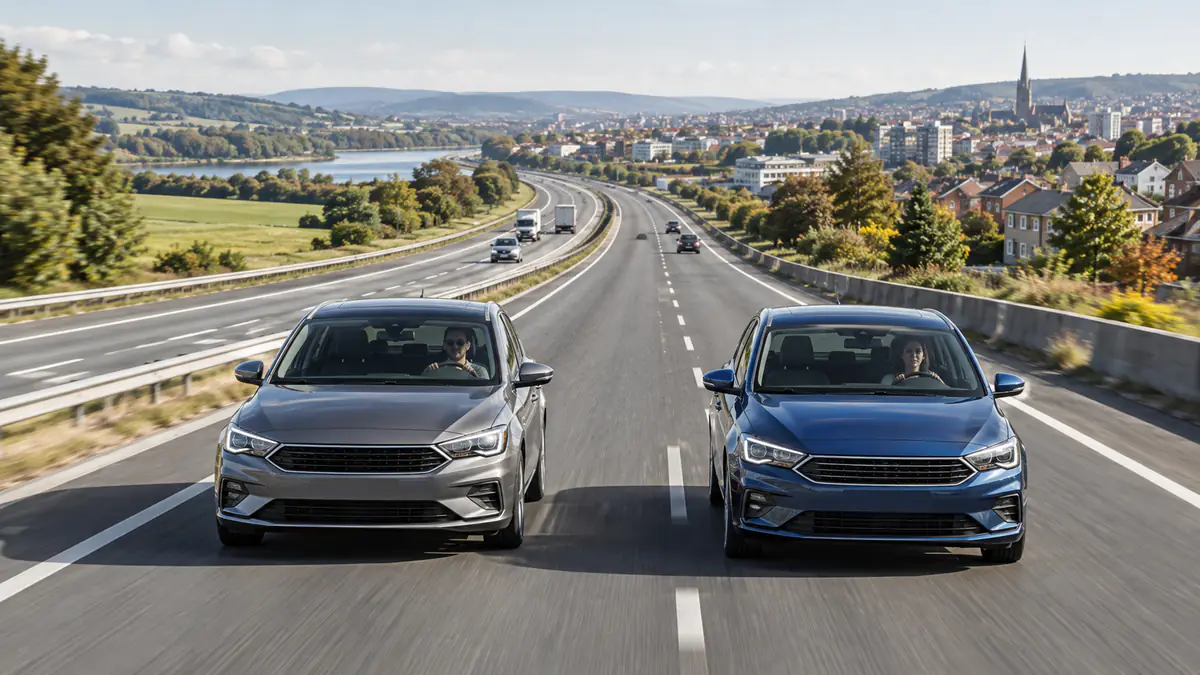
Petrol is ignited by a spark; diesel ignites under compression. That difference lets a diesel engine run a higher compression ratio, which usually turns more of the fuel's energy into useful work at the wheels. Diesel also carries more energy in each litre. Taken together, those two factors mean a diesel car often posts a higher figure in kilometres per litre than a comparable petrol model. The advantage tends to grow on steady motorway running and to shrink on short, cold town trips, where both engines spend more time warming up than working efficiently. Rated figures are measured under test conditions, so treat them as a starting point, not a promise.
The purchase premium and break-even distance
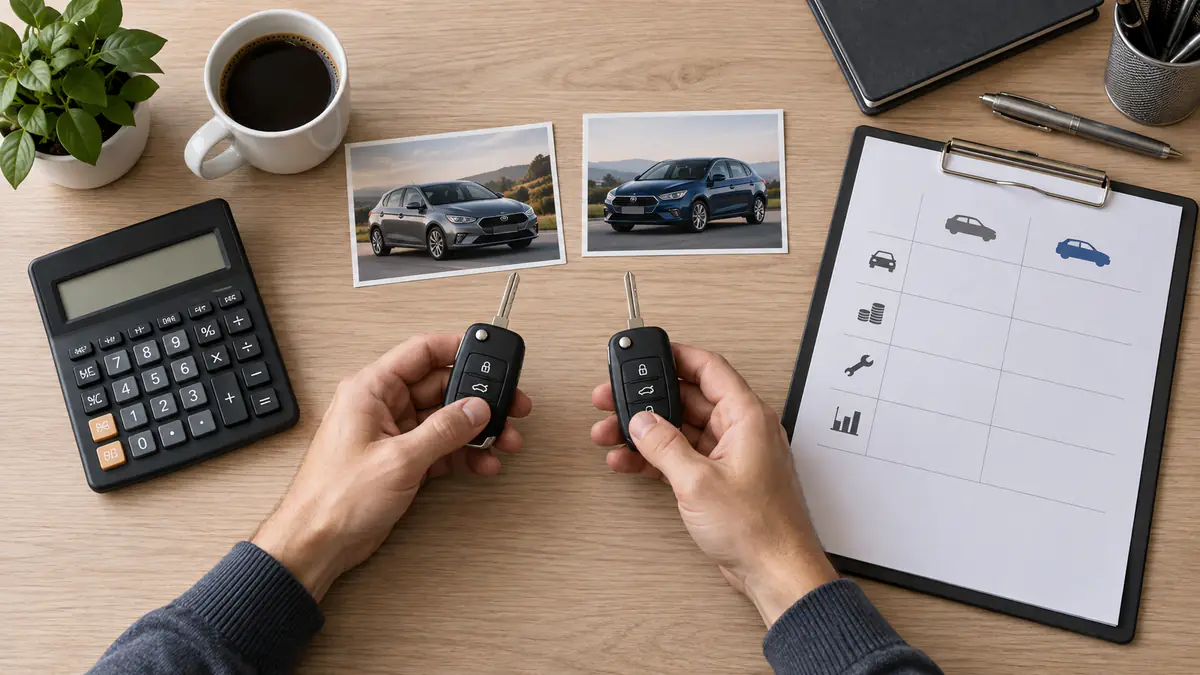
In many markets a diesel version of the same car costs more to buy. Call that extra amount V. The diesel then saves a little on every kilometre through lower fuel use. The break-even distance is V divided by that per-kilometre saving: the distance over which the fuel saving repays the premium. Drive less than that and the petrol car has cost you less so far. Drive more and the diesel pulls ahead. Where that crossing point falls is specific to your two cars, your two prices, and your mileage, so it is worth calculating rather than assuming. Two drivers with the same cars and the same roads can land on different sides of the line purely because one drives twice as far each year.
Doing the break-even calculation yourself
The method has four steps. First, petrol cost per kilometre: petrol price per litre, P, divided by the petrol car's kilometres per litre. Second, diesel cost per kilometre: diesel price per litre, D, divided by the diesel car's kilometres per litre. Third, subtract the second from the first to get the saving per kilometre. Fourth, divide the purchase premium V by that saving to get the break-even distance. If the saving per kilometre comes out at zero or below, no distance repays the premium through fuel alone at those prices, and the diesel only makes sense for reasons the maths does not capture. You can sanity-check the result with a year of your own mileage: multiply the saving per kilometre by the distance you expect to cover and see whether the total clears V.
How sensitive the answer is
Three inputs move the break-even distance, and none of them is fixed. Annual distance matters because you pay the premium once but collect the saving on every kilometre; double your yearly driving and you roughly halve the time to break even. The per-litre price gap matters because a wide diesel premium can shrink the per-kilometre saving or erase it entirely. The efficiency gap matters because a small difference in kilometres per litre produces a small saving and a long payback. Change any one of the three and the crossing point shifts. If you take one habit from this guide, make it recomputing when your annual distance or the local price gap changes, because either can move the answer by a wide margin.
Costs beyond fuel
Fuel is not the only running cost, and a fuel-only break-even can flatter diesel. Servicing prices differ between the two fuels, sometimes in diesel's favour and sometimes not, and service intervals vary by model and market. Diesel emissions systems add parts that petrol cars may not carry, and those parts can demand attention as a vehicle ages.
When repairs enter the picture
High-pressure injectors and turbochargers are not unique to diesel, but on many diesel models they are expensive to replace if they fail. None of this is a certainty. It depends on the specific engine, its maintenance history, and how it has been driven, so treat these items as risks to weigh rather than guaranteed bills. A car with a documented service history tells you more here than a general claim about either fuel.
Rules, taxes, and resale vary by country
How fuel is taxed, and how diesel is treated relative to petrol, is decided at national and sometimes local level. Some places tax the two fuels at different rates, and those rates are revised from time to time. City-access rules in some jurisdictions single out particular vehicles or emissions standards, and the rules differ from one country to the next. Resale is its own moving target, with demand for diesel having shifted in some markets and not others. This guide cannot say what applies where you live, and it will not guess. Check your own jurisdiction and its current rules before the fuel maths decides anything.
Gathering your own numbers
Good output needs honest input. For real efficiency, use at least two consecutive fill-ups: fill to the same point, note the distance covered, then divide that distance by the fuel you added at the second fill-up. Do this for the car you are considering if you can, rather than trusting a brochure figure. For prices, read your local forecourt and use the same unit for both fuels. For the premium V, compare two cars that are otherwise alike and use the actual difference in asking price. For annual distance, add up your regular journeys or read the odometer a year apart. The reasoning behind these figures is set out on our methodology page.
What this guide does not decide
This guide gives you a method, not an answer. It does not know your petrol price, your diesel price, your real kilometres per litre, the premium on the cars you are weighing, or the rules where you drive. It also stops short of insurance, tyres, depreciation, and whatever the resale gap turns out to be when you eventually sell, any of which can outweigh a fuel saving. A figure you measure from your own fill-ups is stronger evidence than a rated number or a rule of thumb, and it is yours to trust.
Run the arithmetic with your own inputs. The petrol vs. diesel calculator handles the break-even steps, and the vehicle comparison calculator puts two specific cars side by side on the same distance. Change one variable at a time, watch how far the crossing point moves, and let your own numbers settle the question.
Published 18 September 2026. Reviewed 18 September 2026 by the Petrol Expense Calculator editorial team.